Hydnet - the specialist in intelligent hydraulic systems
Contact
PRJR

Pressure reducing valve from Sun Hydraulics

Description

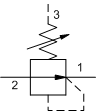
Direct-acting, pressure reducing valves reduce a high primary pressure at the inlet (port 2) to a constant reduced pressure at port 1. These valves incorporate a damped construction for stable operation allowing the use of high reduced pressure.

Read more ▼
  • Note: This valve has no relieving capability. It should not be used in a dead-headed application. If the reduced pressure side of the circuit has very low leakage the pressure may rise significantly. The pressure rise will vary from valve to valve.
  • This type of valve, PR*R, is a good replacement for an LP*C as a normally open, restrictive compensating element if a higher pressure drop across an orifice is needed.
  • Cartridges configured with EPDM seals are for use in systems with phosphate ester fluids. Exposure to petroleum based fluids, greases and lubricants will damage the seals.
  • Full reverse flow from reduced pressure (port 1) to inlet (port 2) may cause the main spool to close. If reverse free flow is required in the circuit, consider adding a separate check valve to the circuit.
  • All spring ranges are tested for correct operation with 5000 psi (350 bar) inlet pressure.
  • Suitable for accumulator circuits since the absence of pilot control flow results in reduced secondary circuit leakage.
  • Direct operated version offers superior dynamic response compared to equivalent pilot operated models.
  • Pressure at port 3 is directly additive to the valve setting at a 1:1 ratio and should not exceed 5000 psi (350 bar).
  • Leakage specified in Technical Data is out of port 3 with a supply pressure of 2000 psi (140 bar) and the valve set at mid range. This leakage is directly proportional to pressure differential and inversely proportional to viscosity expressed in centistokes.
  • Incorporates the Sun floating style construction to minimize the possibility of internal parts binding due to excessive installation torque and/or cavity/cartridge machining variations.

Technical Data

Note: Data may vary by configuration. See CONFIGURATION section.

Cavity T-19A
Series 4
Capacity 80 gpm
Capacity (metric) 320 L/min.
Maximum Operating Pressure 5000 psi
Maximum Operating Pressure (metric) 350 bar
Factory Pressure Settings Established at 0.25 gpm
Maximum Valve Leakage at 110 SUS (24 cSt) 5 in³/min.
Maximum Valve Leakage at 110 SUS (24 cSt) (metric) 80 cc/min.
Adjustment – No. of CW Turns from Min. to Max. setting 5
Valve Hex Size 1 5/8 in.
Valve Hex Size (metric) 41,3 mm
Valve Installation Torque 350 – 375 lbf ft
Valve Installation Torque (metric) 474 – 508 Nm
Adjustment Screw Internal Hex Size 5/32 in.
Adjustment Screw Internal Hex Size (metric) 4 mm
Locknut Hex Size 9/16 in.
Locknut Hex Size (metric) 15 mm
Locknut Torque 80 – 90 lbf in.
Locknut Torque (metric) 9 – 10 Nm
Model Weight 3.50 lb.
Model Weight (metric) 1.59 kg.
Seal kit – Cartridge Viton: 990019006

Configuration Options

Control

C Tamper Resistant – Factory Set
K Handknob
L Standard Screw Adjustment

Adjustment Range

A 750 – 3000 psi (50 – 210 bar), 1000 psi (70 bar) Standard Setting
B 300 – 1500 psi (20 – 105 bar), 500 psi (35 bar) Standard Setting
D 200 – 800 psi (14 – 55 bar), 400 psi (28 bar) Standard Setting
E 100 – 400 psi (7 – 28 bar), 200 psi (14 bar) Standard Setting
S 50 – 200 psi (3,5 – 14 bar), 100 psi (7 bar) Standard Setting
W 1100 – 4500 psi (76 – 315 bar), 1100 psi (76 bar) Standard Setting

Seal Material

N Buna-N
V Viton
E EPDM

Material/Coating

/AP Stainless Steel, Passivated
Cavity: T-19A
Nominal Capacity: 320 lpm (80 gpm)
Downloads
PDFSTP
Possible variants

PRJRCAE, PRJR-CAE, PRJRCAN, PRJR-CAN, PRJRCAN/AP, PRJR-CAN/AP, PRJRCAV, PRJR-CAV, PRJRCAV/AP, PRJR-CAV/AP, PRJRCBE, PRJR-CBE, PRJRCBN, PRJR-CBN, PRJRCBN/AP, PRJR-CBN/AP, PRJRCBV, PRJR-CBV, PRJRCBV/AP, PRJR-CBV/AP, PRJRCDE, PRJR-CDE, PRJRCDN, PRJR-CDN, PRJRCDN/AP, PRJR-CDN/AP, PRJRCDV, PRJR-CDV, PRJRCDV/AP, PRJR-CDV/AP, PRJRCEE, PRJR-CEE, PRJRCEN, PRJR-CEN, PRJRCEN/AP, PRJR-CEN/AP, PRJRCEV, PRJR-CEV, PRJRCEV/AP, PRJR-CEV/AP, PRJRCSE, PRJR-CSE, PRJRCSN, PRJR-CSN, PRJRCSN/AP, PRJR-CSN/AP, PRJRCSV, PRJR-CSV, PRJRCSV/AP, PRJR-CSV/AP, PRJRCWE, PRJR-CWE, PRJRCWN, PRJR-CWN, PRJRCWN/AP, PRJR-CWN/AP, PRJRCWV, PRJR-CWV, PRJRCWV/AP, PRJR-CWV/AP, PRJRKAE, PRJR-KAE, PRJRKAN, PRJR-KAN, PRJRKAV, PRJR-KAV, PRJRKBE, PRJR-KBE, PRJRKBN, PRJR-KBN, PRJRKBV, PRJR-KBV, PRJRKDE, PRJR-KDE, PRJRKDN, PRJR-KDN, PRJRKDV, PRJR-KDV, PRJRKEE, PRJR-KEE, PRJRKEN, PRJR-KEN, PRJRKEV, PRJR-KEV, PRJRKSE, PRJR-KSE, PRJRKSN, PRJR-KSN, PRJRKSV, PRJR-KSV, PRJRKWE, PRJR-KWE, PRJRKWN, PRJR-KWN, PRJRKWV, PRJR-KWV, PRJRLAE, PRJR-LAE, PRJRLAN, PRJR-LAN, PRJRLAN/AP, PRJR-LAN/AP, PRJRLAV, PRJR-LAV, PRJRLAV/AP, PRJR-LAV/AP, PRJRLBE, PRJR-LBE, PRJRLBN, PRJR-LBN, PRJRLBN/AP, PRJR-LBN/AP, PRJRLBV, PRJR-LBV, PRJRLBV/AP, PRJR-LBV/AP, PRJRLDE, PRJR-LDE, PRJRLDN, PRJR-LDN, PRJRLDN/AP, PRJR-LDN/AP, PRJRLDV, PRJR-LDV, PRJRLDV/AP, PRJR-LDV/AP, PRJRLEE, PRJR-LEE, PRJRLEN, PRJR-LEN, PRJRLEN/AP, PRJR-LEN/AP, PRJRLEV, PRJR-LEV, PRJRLEV/AP, PRJR-LEV/AP, PRJRLSE, PRJR-LSE, PRJRLSN, PRJR-LSN, PRJRLSN/AP, PRJR-LSN/AP, PRJRLSV, PRJR-LSV, PRJRLSV/AP, PRJR-LSV/AP, PRJRLWE, PRJR-LWE, PRJRLWN, PRJR-LWN, PRJRLWN/AP, PRJR-LWN/AP, PRJRLWV, PRJR-LWV, PRJRLWV/AP, PRJR-LWV/AP