Hydnet - the specialist in intelligent hydraulic systems
Contact
PBFF

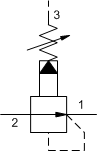
Pressure reducing valve from Sun Hydraulics

Description

Pilot-operated, pressure reducing valves reduce a high primary pressure at the inlet (port 2) to a constant reduced pressure at port 1, allowing circuits with multiple pressure requirements to be operated using a single pump.

Read more ▼
  • These valves have the main stage orifice drilled into the piston rather than a staked-in orifice. This allows the valve to survive physically demanding applications.
  • Cartridges configured with EPDM seals are for use in systems with phosphate ester fluids. Exposure to petroleum based fluids, greases and lubricants will damage the seals.
  • All three-port pressure reducing and reducing/relieving cartridges are physically interchangeable (i.e. same flow path, same cavity for a given frame size). When considering mounting configurations, it is sometimes recommended that a full capacity return line (port 3) be used with reducing/relieving cartridges.
  • Full reverse flow from reduced pressure (port 1) to inlet (port 2) may cause the main spool to close. If reverse free flow is required in the circuit, consider adding a separate check valve to the circuit.
  • If pilot flow consumption is critical, consider using direct acting reducing/relieving valves.
  • Recommended maximum inlet pressure is determined by the adjustment range. Ranges D, E, N, and Q are tested with a 2000 psi (140 bar) maximum differential between inlet and reduced pressure. Ranges A, B, and H are tested with a 3000 psi (210 bar) maximum differential between inlet and reduced pressure. Ranges C and W are tested with 5000 psi (350 bar) of inlet pressure.
  • Pilot operated valves exhibit exceptionally flat pressure/flow characteristics, are very stable and have low hysteresis.
  • Pressure at port 3 is directly additive to the valve setting at a 1:1 ratio and should not exceed 5000 psi (350 bar).
  • Pilot operated reducing, reducing/relieving valves by nature are not fast acting valves. For superior dynamic response, consider direct acting valves.
  • Incorporates the Sun floating style construction to minimize the possibility of internal parts binding due to excessive installation torque and/or cavity/cartridge machining variations.

Technical Data

Note: Data may vary by configuration. See CONFIGURATION section.

Cavity T-2A
Series 2
Capacity 20 gpm
Capacity (metric) 80 L/min.
Factory Pressure Settings Established at blocked control port (dead headed)
Control Pilot Flow 10 – 15 in³/min.
Control Pilot Flow (metric) 0,16 – 0,25 L/min.
Adjustment – No. of CW Turns from Min. to Max. setting 5
Valve Hex Size 1 1/8 in.
Valve Hex Size (metric) 28,6 mm
Valve Installation Torque 45 – 50 lbf ft
Valve Installation Torque (metric) 61 – 68 Nm
Adjustment Screw Internal Hex Size 5/32 in.
Adjustment Screw Internal Hex Size (metric) 4 mm
Locknut Hex Size 9/16 in.
Locknut Hex Size (metric) 15 mm
Locknut Torque 80 – 90 lbf in.
Locknut Torque (metric) 9 – 10 Nm
Model Weight 0.64 lb.
Model Weight (metric) 0.29 kg.
Seal kit – Cartridge Viton: 990202006

Configuration Options

Control

C Tamper Resistant – Factory Set
K Handknob
L Standard Screw Adjustment
O Handknob with Panel Mount

Adjustment Range

A 100 – 3000 psi (7 – 210 bar), 200 psi (14 bar) Standard Setting
B 50 – 1500 psi (3,5 – 105 bar), 200 psi (14 bar) Standard Setting
N 60 – 800 psi (4 – 55 bar), 200 psi (14 bar) Standard Setting
Q 60 – 400 psi (4 – 28 bar), 200 psi (14 bar) Standard Setting
W 150 – 4500 psi (10,5 – 315 bar), 200 psi (14 bar) Standard Setting
C 150 – 6000 psi (10,5 – 420 bar), 200 psi (14 bar) Standard Setting

Seal Material

N Buna-N
V Viton

Material/Coating

/LH Mild Steel, Zinc-Nickel
Cavity: T-2A
Nominal Capacity: 80 lpm (20 gpm)
Downloads
PDFSTP
Possible variants

PBFF8DN, PBFF-8DN, PBFF8DV, PBFF-8DV, PBFF8WN, PBFF-8WN, PBFF8WV, PBFF-8WV, PBFFCAN, PBFF-CAN, PBFFCAN/LH, PBFF-CAN/LH, PBFFCAV, PBFF-CAV, PBFFCAV/LH, PBFF-CAV/LH, PBFFCBN, PBFF-CBN, PBFFCBN/LH, PBFF-CBN/LH, PBFFCBV, PBFF-CBV, PBFFCBV/LH, PBFF-CBV/LH, PBFFCCN, PBFF-CCN, PBFFCCN/LH, PBFF-CCN/LH, PBFFCCV, PBFF-CCV, PBFFCCV/LH, PBFF-CCV/LH, PBFFCNN, PBFF-CNN, PBFFCNN/LH, PBFF-CNN/LH, PBFFCNV, PBFF-CNV, PBFFCNV/LH, PBFF-CNV/LH, PBFFCQN, PBFF-CQN, PBFFCQN/LH, PBFF-CQN/LH, PBFFCQV, PBFF-CQV, PBFFCQV/LH, PBFF-CQV/LH, PBFFCWN, PBFF-CWN, PBFFCWN/LH, PBFF-CWN/LH, PBFFCWV, PBFF-CWV, PBFFCWV/LH, PBFF-CWV/LH, PBFFKAN, PBFF-KAN, PBFFKAV, PBFF-KAV, PBFFKBN, PBFF-KBN, PBFFKBV, PBFF-KBV, PBFFKCN, PBFF-KCN, PBFFKCV, PBFF-KCV, PBFFKNN, PBFF-KNN, PBFFKNV, PBFF-KNV, PBFFKQN, PBFF-KQN, PBFFKQV, PBFF-KQV, PBFFKWN, PBFF-KWN, PBFFKWV, PBFF-KWV, PBFFLAN, PBFF-LAN, PBFFLAN/LH, PBFF-LAN/LH, PBFFLAV, PBFF-LAV, PBFFLAV/LH, PBFF-LAV/LH, PBFFLBN, PBFF-LBN, PBFFLBN/LH, PBFF-LBN/LH, PBFFLBV, PBFF-LBV, PBFFLBV/LH, PBFF-LBV/LH, PBFFLCN, PBFF-LCN, PBFFLCN/LH, PBFF-LCN/LH, PBFFLCV, PBFF-LCV, PBFFLCV/LH, PBFF-LCV/LH, PBFFLNN, PBFF-LNN, PBFFLNN/LH, PBFF-LNN/LH, PBFFLNV, PBFF-LNV, PBFFLNV/LH, PBFF-LNV/LH, PBFFLQN, PBFF-LQN, PBFFLQN/LH, PBFF-LQN/LH, PBFFLQV, PBFF-LQV, PBFFLQV/LH, PBFF-LQV/LH, PBFFLWN, PBFF-LWN, PBFFLWN/LH, PBFF-LWN/LH, PBFFLWV, PBFF-LWV, PBFFLWV/LH, PBFF-LWV/LH, PBFFOAN, PBFF-OAN, PBFFOAV, PBFF-OAV, PBFFOBN, PBFF-OBN, PBFFOBV, PBFF-OBV, PBFFOCN, PBFF-OCN, PBFFOCV, PBFF-OCV, PBFFONN, PBFF-ONN, PBFFONV, PBFF-ONV, PBFFOQN, PBFF-OQN, PBFFOQV, PBFF-OQV, PBFFOWN, PBFF-OWN, PBFFOWV, PBFF-OWV