Hydnet - the specialist in intelligent hydraulic systems
Contact
PSHB

Pressure reducing/relieving valve from Sun Hydraulics

Description

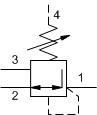
Direct-acting, pressure reducing/relieving valves reduce a high primary pressure at the inlet (port 2) to a constant reduced pressure at port 1, with a full-flow relief function from port 1 to tank (port 3). Draining port 4 makes the valve insensitive to pressure at port 3. These valves incorporate a damped construction for stable operation allowing the use of high reduced pressure.

Read more ▼
  • Maximum pressure at port 3 should be limited to 3000 psi (210 bar).
  • All spring ranges are tested for correct operation with 5000 psi (350 bar) inlet pressure.
  • Suitable for accumulator circuits since the absence of pilot control flow results in reduced secondary circuit leakage.
  • Direct acting concept provides highly reliable operation in contaminated systems, especially at dead headed conditions.
  • Unlike pilot operated versions, direct acting valves exhibit a transitional step between reducing and relieving modes. This step equals 5% of the high end of the adjustment range, independent of the valve setting. Therefore, these valves may not be suitable for counterbalancing applications.
  • Direct operated version offers superior dynamic response compared to equivalent pilot operated models.
  • Pressure on the drain (port 4) is directly additive to the valve setting at a 1:1 ratio and should not exceed 5000 psi (350 bar).
  • Leakage specified in Technical Data is out of port 3 with a supply pressure of 2000 psi (140 bar) and the valve set at mid range. This leakage is directly proportional to pressure differential and inversely proportional to viscosity expressed in centistokes.
  • Cartridges configured with EPDM seals are for use in systems with phosphate ester fluids. Exposure to petroleum based fluids, greases and lubricants will damage the seals.
  • Full reverse flow from reduced pressure (port 1) to inlet (port 2) may cause the main spool to close. If reverse free flow is required in the circuit, consider adding a separate check valve to the circuit.
  • By controlling the pressure at the drain (port 4), the effective setting of the valve can be increased over the nominal valve setting.
  • Incorporates the Sun floating style construction to minimize the possibility of internal parts binding due to excessive installation torque and/or cavity/cartridge machining variations.

Technical Data

Note: Data may vary by configuration. See CONFIGURATION section.

Cavity T-23A
Series 3
Capacity 40 gpm
Capacity (metric) 160 L/min.
Maximum Operating Pressure 5000 psi
Maximum Operating Pressure (metric) 350 bar
Factory Pressure Settings Established at 0.25 gpm
Maximum Valve Leakage at 110 SUS (24 cSt) 4 in³/min.@1000 psi
Maximum Valve Leakage at 110 SUS (24 cSt) (metric) 65 cc/min.@70 bar
Adjustment – No. of CW Turns from Min. to Max. setting 5
Valve Hex Size 1 1/4 in.
Valve Hex Size (metric) 31,8 mm
Valve Installation Torque 150 – 160 lbf ft
Valve Installation Torque (metric) 203 – 217 Nm
Adjustment Screw Internal Hex Size 5/32 in.
Adjustment Screw Internal Hex Size (metric) 4 mm
Locknut Hex Size 9/16 in.
Locknut Hex Size (metric) 15 mm
Locknut Torque 80 – 90 lbf in.
Locknut Torque (metric) 9 – 10 Nm
Model Weight 1.49 lb.
Model Weight (metric) 0.68 kg.
Seal kit – Cartridge Viton: 990023006

Configuration Options

Control

C Tamper Resistant – Factory Set
K Handknob
L Standard Screw Adjustment

Adjustment Range

A 750 – 3000 psi (50 – 210 bar), 1000 psi (70 bar) Standard Setting
B 300 – 1500 psi (20 – 105 bar), 500 psi (35 bar) Standard Setting
D 200 – 800 psi (14 – 55 bar), 400 psi (28 bar) Standard Setting
E 100 – 400 psi (7 – 28 bar), 200 psi (14 bar) Standard Setting
S 50 – 200 psi (3,5 – 14 bar), 100 psi (7 bar) Standard Setting
W 1100 – 4500 psi (76 – 315 bar), 1100 psi (76 bar) Standard Setting

Seal Material

N Buna-N
V Viton
E EPDM
Cavity: T-23A
Nominal Capacity: 40 gpm (160 lpm)
Downloads
PDFSTP
Possible variants

PSHBCAE, PSHB-CAE, PSHBCAN, PSHB-CAN, PSHBCAV, PSHB-CAV, PSHBCBE, PSHB-CBE, PSHBCBN, PSHB-CBN, PSHBCBV, PSHB-CBV, PSHBCDE, PSHB-CDE, PSHBCDN, PSHB-CDN, PSHBCDV, PSHB-CDV, PSHBCEE, PSHB-CEE, PSHBCEN, PSHB-CEN, PSHBCEV, PSHB-CEV, PSHBCSE, PSHB-CSE, PSHBCSN, PSHB-CSN, PSHBCSV, PSHB-CSV, PSHBCWE, PSHB-CWE, PSHBCWN, PSHB-CWN, PSHBCWV, PSHB-CWV, PSHBKAE, PSHB-KAE, PSHBKAN, PSHB-KAN, PSHBKAV, PSHB-KAV, PSHBKBE, PSHB-KBE, PSHBKBN, PSHB-KBN, PSHBKBV, PSHB-KBV, PSHBKDE, PSHB-KDE, PSHBKDN, PSHB-KDN, PSHBKDV, PSHB-KDV, PSHBKEE, PSHB-KEE, PSHBKEN, PSHB-KEN, PSHBKEV, PSHB-KEV, PSHBKSE, PSHB-KSE, PSHBKSN, PSHB-KSN, PSHBKSV, PSHB-KSV, PSHBKWE, PSHB-KWE, PSHBKWN, PSHB-KWN, PSHBKWV, PSHB-KWV, PSHBLAE, PSHB-LAE, PSHBLAN, PSHB-LAN, PSHBLAV, PSHB-LAV, PSHBLBE, PSHB-LBE, PSHBLBN, PSHB-LBN, PSHBLBV, PSHB-LBV, PSHBLDE, PSHB-LDE, PSHBLDN, PSHB-LDN, PSHBLDV, PSHB-LDV, PSHBLEE, PSHB-LEE, PSHBLEN, PSHB-LEN, PSHBLEV, PSHB-LEV, PSHBLSE, PSHB-LSE, PSHBLSN, PSHB-LSN, PSHBLSV, PSHB-LSV, PSHBLWE, PSHB-LWE, PSHBLWN, PSHB-LWN, PSHBLWV, PSHB-LWV